One of the most prevalent dental diseases amongst individuals in all ages is tooth decay. Untreated cavities can cause anything from mild sensitivity to severe pain and infection that may be harmful to your oral health. The understanding of treatment for tooth decay is important in order to keep your teeth healthy, practice good oral hygiene, and to prevent other issues such as loss of teeth.
In this blog, you’ll learn: What tooth decay is, Causes and symptoms of tooth decay ,the best treatment for tooth decay ,How to prevent tooth decay and more Keep reading to ensure your smile remains clean and healthy!
What Is Tooth Decay?
Plaque, that sticky film of bacteria that covers your teeth, creates acid that damages the enamel and leads to tooth decay. Eventually, this damage results in cavities which become worse if untreated.
Early detection and resolution of tooth decay can prevent the disease from progressing and save your natural tooth structure.
Causes of Tooth Decay
There are several factors that cause tooth decay:
- Poor oral hygienehabits
- A diet high in sweet or acidic food
- Inadequate fluoride exposure
- Dry mouth or lack of saliva production
- Skipping regular dental checkups
If they are not kept clean, these factors will permit bacteria to act on the tooth surface to cause decay and necessitate treatment for tooth decay.
Symptoms of Tooth Decay
Early identification of symptoms also helps you to decide the right treatment for tooth decay. Common signs include:
- Sensitivity to hot, cold or sweet food and drinks
- Holes in or dark spots on teeth
- Toothache or pain while chewing
- Bad breath or unpleasant taste
Occurs to a lesser extent (or does not occur) : Swelling or infection,in severe cases. If you notice any of these symptoms, it’s crucial to see a dentist as soon as possible.
Stages of Tooth Decay
Knowing the decay stage helps us decide what type of treatment to administer for tooth decay:
- Initial enamel loss – White spot lesions begin to appear
- Enamel decay – Cavities form
- Decay of dentin – sensitive and painful
- Pulp infection – Intense pain and formation of abscess.
Care varies from simple in the early stages, to more complex when advanced.
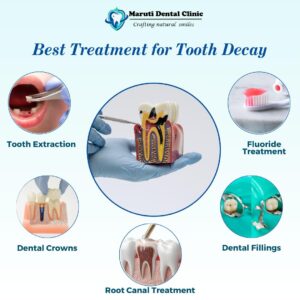
Best Treatment for Tooth Decay
Current dental technology provides multiple effective alternatives for severity of decay.
- Fluoride Treatment
In the early stages, professional fluoride treatments can help strengthen enamel and even reverse minor decay. This is a preventive treatment for tooth decay It’s good when there is no cavities yet.
- Dental Fillings
Cavities are treated most commonly with dental fillings. The part is drilled out and replaced with something (like composite) that restores the function and look of your tooth.
- Root Canal Treatment
When decay or damage to the tooth extends to the pulp, root canal treatment is required. This remedy for tooth decay eliminates infections, stops pain and allows you to save your teeth.
- Dental Crowns
In the case of badly damaged teeth, crowns are placed following treatment to provide strength and protect what is left of the tooth.
- Tooth Extraction
In severe cases, when the tooth can no longer be saved, extraction is the last in line of treatment for decayed teeth and then replacement treatments such as dental implants or bridges.
Why Early Treatment Matters
The consequences of leaving tooth decay untreated include:
- Severe pain and infection
- Tooth loss
- Infection that has spread to neighboring teeth
- Higher treatment costs
Early dental checkups lead to easier, quicker, and less expensive treatments.
How to Prevent Tooth Decay
Preventing tooth decay remains critical after you’ve been treated for it. Follow these tips:
- Brush with fluoride toothpaste twice a day
- Floss regularly to remove plaque
- Limit sugary snacks and drinks
- Drink plenty of water
- Have a dental check-up every 6 months
By adopting healthy habits you can lower the risk of decay returning and look after your treated teeth.
When to See a Dentist
You must see a dentist if you have:
- Persistent tooth pain or sensitivity
- Visible cavities or discoloration
- Swelling or bleeding gums
- Persistent bad breath
Early advice can bring the right intervention for tooth decay before it turns into a problem.
Conclusion
Tooth decay can happen to the best of us but is totally treatable with prompt attention. Knowing why tooth decay occurs, what the symptoms are, and how it can be treated can help you take charge of your dental health. With an early diagnosis, professional dental treatment and proper at-home care, you can keep your teeth for a lifetime and enjoy smiling confidently. If you believe you have decay or would like professional guidance, visit maruti dental clinic and start the perfect treatment of tooth decay now.