Pain in the jaw, clicking when the mouth is opened and trouble chewing or recurring headaches can sometimes be associated with problems involving the temporomandibular joint. TMJ disorders are conditions that impact the joints and muscles that enable jaw movement. Some symptoms may not last long, but constant discomfort should be checked with a dentist.
Maruti Dental Clinic counsels the cause of jaw pain to the patients, it can be any problem, so our doctors look after each dental issue and treat every patient with necessary diagnosis.
What Are TMJ Disorders?
TMJ disorders are any disorder causing problems with the temporomandibular joint, associated muscles and surrounding structures. Each side of the face has one temporomandibular joint, which connects the lower jaw to the rest of your skull.
These joints allow you to do daily movements like:
- Opening and closing your mouth
- Chewing food
- Speaking
- Yawning
- Shifting your jaw side to side
Symptoms can develop when the joint or surrounding muscles are irritated, inflamed, strained, or damaged. Its severity and causes often differ from person to person.
Common Causes of TMJ Disorders
There are a number of causes of TMJ disorders. At times, it can be caused by more than one factor.
Teeth Grinding and Jaw Clenching
Continuously grinding or clenching teeth puts unnecessary strain on the jaw muscles and joints. This can result in muscle fatigue, soreness, and pain.
Jaw Injury
blow or injury to the jaw, this can affect the temporomandibular joint and surrounding tissues.
Arthritis
For example, arthritis syndromes like osteoarthritis or rheumatoid arthritis can cause inflammation of the joint and limit mobility and cause pain.
Stress
Some people unconsciously tighten up their jaw or grind their teeth when stressed which increases the load on the muscles.
Bite and Dental Problems
Jaw pain can also occur due to certain dental conditions or changes in the relation of teeth.
Symptoms of TMJ Disorders
Being able to identify the symptoms of TMJ dysfunction will allow you to understand when it may be time to obtain a professional assessment.
Common symptoms include:
- Pain or tenderness in the joint area
- Jaw clicking or popping when moving
- Difficulty opening the mouth fully
- Jaw stiffness
- Pain while chewing
- Facial discomfort
- Otalgia without obvious ear disease
- Headaches
- Neck or shoulder discomfort
- Jaw locking in some cases
Clicking with no pain or movement restriction does not require treatment. But any painful or worsening symptoms should be evaluated by a dentist.
How Are TMJ Disorders Diagnosed?
Diagnosis of TMJ disorders starts with a comprehensive history in both dental and medical domains. Your dentist may inquire about pain in your jaw, grinding, injury, headaches, and change in chewing or ability to open your mouth.
The dentist may during the examination:
- Check jaw movement
- Examine the jaw muscles
- Look for tenderness or swelling
- Listen for clicks or grinding noises
- Evaluate how your teeth line up
- Check for signs of tooth wear
Based upon your symptoms, dental X-rays and other imaging scans may be suggested to assess the joint as well as nearby tissues.
Treatment Options for TMJ Disorders
As such, treatment for TMJ disorders varies based on the root cause and severity of symptoms. Most people can do quite well without going through the more invasive approaches.
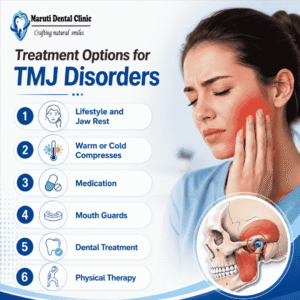
Lifestyle and Jaw Rest
Staying away from activities that put excess strain on the jaw can assist. That may mean limiting excessive gum chewing or masticating hard foods and avoiding extreme opening of the mouth.
Warm or Cold Compresses
For some people, using a heat or ice pack on the area that is bothering them may ease discomfort.
Medication
After thorough examination, they may prescribe you medications to help you cope with pain or inflammation.
Mouth Guards
Your dentist may propose a custom fitted oral appliance for grinding or clenching patients. They can prevent wear on your teeth from grinding, and may alleviate stress associated with nighttime grinding.
Dental Treatment
If the symptoms are caused by an underlying dental problem, these will be managed with suitable dental treatment.
Physical Therapy
Certain jaw and neck exercises may be used to improve the range of motion and muscle function in particular patients. These, of course, should be done with proper professional guidance where appropriate.
Conservative measures are usually insufficient to resolve an issue, in case of a specific disease from the joint.
Can TMJ Disorders Be Prevented?
Not all TMJ disorders can be prevented, however some behaviors may decrease the chances of excessive strain on the jaw.
Consider these tips:
- Avoid chewing gum
- Avoid chewing ice or extremely hard
- Keep your jaw relaxed outside of meal
- Avoid unnecessary teeth
- Learn stress management through good relaxation
- Follow good oral hygiene
- Get professional advice on teeth
- Attend regular dental
If you notice repeated jaw discomfort, early evaluation may help identify contributing factors.
When to Visit a Dentist?
Mild jaw clicking and popping does not indicate need for treatment if it is pain free. But you should really consult a dentist if you suffer from:
- Persistent jaw pain
- You are having a hard time opening and closing your mouth
- Pain while chewing
- Repeated jaw locking
- More frequent headaches linked to jaw pain
- Significant tooth wear from grinding
- Symptoms following a jaw injury
Timely diagnosis can indicate whether your symptoms are related to TMJ disorders or other dental or medical conditions.
How Maruti Dental Clinic Can Help
At Maruti Dental Clinic, we only suggest a treatment after establishing the factors that might be responsible for jaw pain. Based on a thorough assessment of your teeth, bite, jaw movement and oral health, our team can determine the best choice of treatment .
Our approach focuses on:
- Comprehensive dental evaluation
- Assessment of jaw and bite
- Management of teeth grinding
- Preventive dental care
- Personalized treatment planning
- Patient-focused dental treatment
However, if TMJ disorders manifest with persistent symptoms, a professional dental examination will find out the cause and treatment possibilities.
Frequently Asked Questions
1. Are TMJ disorders serious?
This can vary from mild, temporary irritation to a chronic condition affecting the function of the jaw. See a doctor if you experience persistent pain, locking or limited movement.
2. Can stress cause jaw problems?
Stress is one of the reasons we clench and grind (bruxism) a habit that puts stress on our jaw muscles and joints.
3. Should every clicking jaw be treated?
Not necessarily. If, however, there is a painless click without restricted movement it may not require treatment. And a dentist is equipped to analyze the need for additional evaluation.
4. Can a mouth guard help?
Oral appliances may be prescribed by a dentist for some patients, particularly if they grind or clench their teeth.
Conclusion
TMJ disorders may interfere with normal daily activities like eating, speaking and yawning. Inability to normally move your mouth, jaw pain and stiffness, clicking of the jaw and headaches are some of the common TMJ Symptoms. Since the causes can vary from individual to individual proper dental assessment must be performed before treatment is made.
Things like decreased jaw strain, managing clenching, better oral hygiene and speaking to a professional in case of prolonged symptoms can go a long way towards improving your jaws.
Maruti Dental Clinic is a one-stop for all dental worries, and on this initial visit, a thorough examination will be done followed by individualized recommendations. Consulting with a dental professional for TMJ disorder symptoms instead of ignoring it when you deal with pain and restricted jaw movement is the safest route.