Maintaining good oral health is about more than brushing and flossing every day. Through regular dental checkups & professional care, you can spot potential problems before they cause pain or are a costly headache. Preventive dental treatments focus on protecting your teeth and gums, reducing the risk of cavities, gum disease, enamel damage, and other common dental problems.
The bottom line is that we try to avoid steps whenever it’s possible at Maruti Dental Clinic. When you come to our dental practice for regular visits, it gives our dental team the opportunity to track your oral health and catch any early warning signs, before they can become a real problem.
What Are Preventive Dental Treatments?
Preventive dental treatments are the various methods and treatments for dental issues performed on patients to detect or prevent oral health problems early on. Preventive care means not waiting until you have a cavity or a dental infection, but doing everything in your power to keep your teeth and gums healthy all year long.
It involves dental health tracking treatments like professional assessments, teeth cleaning and check-ups, fluoride applications, sealants, oral cancer screening and some other as well tailored to your needs.
What you need depends on your age, what condition your mouth and teeth are in, medical history as well as lifestyle and risk for oral ailments.
Understanding The Importance of Preventative Dental Care
Most dental issues develop over time and do not show symptoms early in the process. If left unnoticed, a tiny cavity, initial gum swelling or enamel damage can progress.
Preventive dental treatments if regularly done, will help:
- Detect cavities early
- Prevent excessive plaque buildup
- Lower your risk for gum disease
- Protect tooth enamel
- Recognize early signs of oral health issues
- Maintain fresh breath
- Preserve natural teeth
- Cut back on demanding dental procedures
Another benefit of preventive care is that it aids in the development of healthy dental hygiene habits that will endure into adulthood.
Types of Preventive Dental Treatments
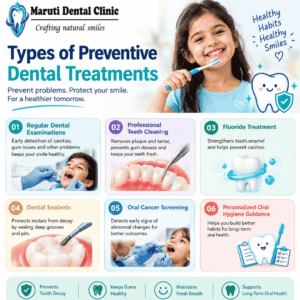
This help comes in a variety of forms which are many, so lets jump on to the different ways dentists can protect your oral health. Depending on your needs, your dentist will recommend one or more options.
Regular Dental Examinations
Dental check-ups are perhaps the most significant forms of preventive dental treatments that you can get done. A dental exam consists of the dentist assessing your teeth, gums, bite and other parts of your mouth.
The dentist may look for:
- Tooth decay
- Gum inflammation
- Plaque and tartar
- Cracked or damaged teeth
- Tooth wear
- Changes in the gums
- Bite-related concerns
This may involve dental X-rays if there is a need to detect the issues that are not visible from outside.
Professional Teeth Cleaning
However, even with brushing and flossing regularly, plaque can still build up in unreachable areas. Once it hardens into tartar, a regular toothbrush simply cannot remove it.
This treatment takes the plaque and tartar off the teeth and gumline. This can decrease the chances of gum inflammation and result in good oral hygiene.
Your dentist will schedule professional cleaning at regular intervals based on your oral health.
Fluoride Treatment
Fluoride strengthens tooth enamel and can make teeth more resistant to the acid attacks of bacteria.
In certain cases, professional fluoride treatment may be offered to even those with an increased risk for tooth decay. It can especially benefit the mouths of kids and anyone with frequent cavities, though fluoride treatment is best determined based on specific cases.
Dental Sealants
Dental sealant is resistant, thin coating applied to the top of back teeth (usually molars) where most cavities occur. They are tough to clean thoroughly and can harbor food particles and bacteria.
Sealants will cover these surfaces and act as a barrier, which lowers the occurrence of cavities.
These are often most suited to children and young people but may also be suitable for adults in some cases.
Oral Cancer Screening
Screening for oral cancer is sometimes performed as part of a routine dental examination. The dentist examines the mouth, gums, tongue, cheeks, and other oral tissues for abnormal changes.
These may include persistent sores, white patches, or lumps in the mouth and throat, unexplained bleeding, or nonhealing or thickening spots.
Early detection of abnormal oral changes is important to help provide better treatment choices and outcomes.
Preventive Dental Treatments for Children
It is important for children to be treated differently because they have bones especially in teeth and jaws that are developing. As with many other areas of life, it is much easier to prevent a problem than to fix one, and getting into the habit of good dental hygiene from an early age will help avoid many common problems.
Regular dental exams, professional cleaning, treatment with fluoride or dental sealants and age-appropriate oral hygiene education are some of the key preventive dental services for children.
Parents should encourage children to:
- Brush twice a day
- Use fluoride toothpaste as recommended
- Limit sugary snacks and drinks
- Drink plenty of water
- Do Not Use Your Teeth to open packages
- Visit the dentist regularly
Young children should also be supervised while brushing their teeth to make sure that they brush adequately.
Preventive Dental Care for Adults
Avoiding regular Dental Visits can make Adults with No Current Pain susceptible to more serious problems. The underlying dental issues can be subtle and regular checkups help you to identify changes early on.
Adults can benefit from:
- Routine dental examinations
- Professional teeth cleaning
- Fluoride care when appropriate
- Gum health assessments
- Oral cancer screening
- Examining damaged or worn teeth
- Personalized oral hygiene advice
Your dentist may need to work with you one-on-one if you have braces, dental implants, dentures, crowns or a history of gum disease.
How often should I go to the dentist?
One schedule does not fit all. Most individuals should have regular dental visits every six months, but your dentist may recommend that you visit every 3 to 4 months.
By going regularly, your dentist can keep an eye on changes and suggest preventive dental treatments if needed.
The tooth pain, swelling, bleeding gums, persistent bad breath, sensitivity or a chipped tooth should not wait for your next routine appointment.
Habits To Practice for Preventive Care in Your Teeth
Healthy habits at home only enhance the results of professional dental care.
Brush Twice Daily
Use a fluoride toothbrush and soft bristled brush, brushing the teeth for about two minutes.
Floss Daily
Flossing is used to remove plaque and food particles from between teeth where a toothbrush may be ineffective.
Limit Sugary Foods
Eating sugar often can increase the risk of dental caries. Snack on healthy food and cut down on sugar-sweetened drinks.
Drink Water
Water washes food debris away and creates an optimal environment for oral health.
Avoid Tobacco
Tobacco use and smoking are significant, proven risks for gum disease, tooth loss and oral cancer.
Replace Your Toothbrush
Replace your toothbrush or toothbrush head when the bristles wear out, which is approx. every three to four months (depending on usage).
Why Choose Maruti Dental Clinic?
How Maruti Dental Clinic Can Help with Preventive Dental Treatment at Our Clinic? Early detection, personalized care, and long-term oral health is our priority.
Our staff can evaluate your teeth and gums and determine the right course for you based on how healthy they are.
As part of our preventive dental care, you may receive:
- Routine dental examinations
- Professional teeth cleaning
- Scaling and polishing
- Fluoride treatments
- Dental sealants
- Gum health evaluation
- Oral cancer screening
- Personalized oral hygiene guidance
We want to make an effort to have patients keep their natural teeth and avoid dental problems which are widely preventable.
Frequently Asked Questions
1. What are preventive dental treatments?
These are preventive dental care procedures and professional services to prevent oral problems or detect them early.
2. Are preventive treatments necessary if my teeth don’t hurt?
Yes. Most dental issues from early cavities or gum disease, are painless at first. Early recognition of these issues can come as a result of a series of normal examinations.
3. Is it possible to prevent cavities altogether with preventive care?
No treatment will help avoid getting cavities altogether. Yet following a regiment of good dental hygiene, as well as healthy eating habits, fluoride, cleaning and visits to the dentist can greatly help limit that risk.
4. Can children get preventive dental procedures?
Yes. Preventive care, including dental examinations, fluoride treatments and sealants along with oral hygiene instruction can be provided in age-appropriate forms for children.
Conclusion
Prevention is the key to having good dental health. Early detection of problems, protection for teeth and gums and the potential elimination or reduction in the need for complex dental procedures are just a few of preventive dental treatment benefits.
Routine dental check-ups, cleanings, fluoride care, protective dental sealants, and proper daily habits lead to a lifelong healthy smile. How to Treat Gum Disease the way you will take care of it would depend on your age, expectations, dental history, lifestyle and individual risk factors.
Maruti Dental Clinic, we aim to provide personalized preventive care for children and adults so that they make a good habit of maintaining healthy and confident smiles. If you have not had a checkup in a couple of years, make an appointment to be examined because it may well help save your teeth and gums for many more years down the line.