Sleeping is important because it allows your body and mind to recharge, heal, and repair. But some people many times find themselves getting repeated breaks in breathing when they are sleeping. Interruptions that the individual is not completely aware of, which can impair sleep quality, energy levels and general wellbeing.
Obstructive Sleep Apnoea (OSA) is one of the most prevalent types of sleep-disorder breathing related disorders. It happens when the upper airway gets blocked during sleep, so your breathing starts and stops again.
However, loud and chronic snoring with breath pauses, gasping or daytime fatigue should not be neglected. So, by knowing the causes of OSA along with its symptoms and treatment methods, one can easily identify the condition from an early stage and consult a doctor to avoid complications.
What Is Obstructive Sleep Apnoea?
Obstructive sleep apnoea (OSA) the most common form of sleep apnoea happens when the muscles and tissues in the throat become overly relaxed during your short periods of unconsciousness while sleeping. During sleep, this muscle relaxes which can narrow or close the upper airway and briefly stop air from flowing.
As when breathing ceases, the body can lose oxygen in the blood. The brain responds to usability by waking the person for a moment or invoking a lighter stage of sleep so that normal breathing can resume. These disruptions can happen multiple times during the night.
As these awakenings tend to be quite brief, most will not notice them the next morning. But constant disruptions will block the body from obtaining proper restorative sleep.
Common Symptoms
Symptoms of Obstructive Sleep Apnoea (OSA) may be exhibited during the day as well as at night. Among the most common signs are:
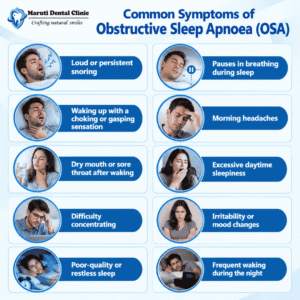
- Loud or persistent snoring
- Pauses in breathing during sleep
- Waking up with a choking or gasping feeling
- Morning headaches
- Waking with a dry mouth or sore throat
- Excessive daytime sleepiness
- Difficulty concentrating
- Irritability or mood changes
- Poor-quality or restless sleep
- Frequent waking during the night
The injured person himself might not always realise these symptoms. A spouse or family member may notice heavy snoring or intervals when breathing seems to stop.
What Causes It?
We are all at a higher risk for OSA based on certain factors. Excessive weight particularly around the neck, which can more easily lead to collapse of the airway.
Other possible risk factors include a naturally narrow airway, large tonsils, some jaw or throat deformities, nasal congestion, aging and the family history.
Symptoms may also be influenced by lifestyle factors. Here are a few of them: Alcohol and some medicines which can cause relaxation or sleepiness may worsen airway obstruction in some patients. Smoking may also lead to upper airway inflammation and swelling.
Obesity And Sleep Apnoea: Not everyone with sleep apnoea is overweight! Thus, if you are having persistent symptoms, please see a provider of any body type.
What Is The Impact Of OSA On Daily Life?
Untreated Obstructive Sleep Apnoea (OSA) can impact more than just nighttime slumber. With frequent stops in breathing, you might end up sleepy during the day time and struggling with staying focused.
Have you ever felt tired after having spent almost a whole day in bed before? They may have difficulty staying awake at the workplace, in study or during simple activities.
However, in some people and situations, excessive sleepiness can place individuals at a higher risk for accidents like when driving or using machinery.
Disrupting healthy sleep long term can also have negative effects on mood, memory and overall quality of life. For these reasons, it is critical to catch the symptoms early.
Diagnosis of Obstructive Sleep Apnoea
If sleep apnoea is suspected, a medical professional may question sleeping patterns, snorting, daytime exhaustion as well other signs. Even information from a sleeping partner comes in handy.
They may ask you for a sleep study to check whether your breathing is disrupted, your oxygen drops or heart rate increases while asleep. Testing may be conducted in a sleep centre or with an appropriate home based test, depending on the situation.
The results ultimately help indicate whether OSA is present and severity level. Diagnosis should not be purely reliant on snoring or daytime sleepiness, but rather by a trained clinician.
Treatment Options
The course of treatment depends on the severity of the condition, and the general health of the patient that is suffering from airway obstruction based on its complete physiological aspects.
One of the popular treatments is continuous positive airway pressure (CPAP). A CPAP (Continuous Positive Airway Pressure) machine delivers air through a mask to help keep the airway open during sleep.
Others who have obstructive sleep apnea may find relief from an oral device called mandibular advancement device (MAD) that shifts the jaw or tongue into position to keep the air passage open. For some patients with significant anatomical components to the airway obstruction, surgery may play a role in management.
And certain lifestyle changes can also be effective. Staying at or near a healthy weight, exercising regularly, not smoking and limiting alcohol can promote healthier sleep. The position of the body while sleeping may affect the symptoms in certain individuals as well.
When Should You Look for Medical Advice?
Lasting loud snoring should not always be dismissed as a benign sleeping habit, particularly when occurring with breathing pauses, choking/gasping or severe daytime drowsiness.
If you or someone you know has any of these symptoms, it might be a good idea to reach out to a health care provider. This will help to elucidate what the root of the problem is and whether further investigation is warranted.
If daytime sleepiness is interfering with work, attention, driving or other daily activities it is all the more advisable to seek professional advice.
Improving Sleep Health
Sleep Hygiene with proper Medical Attention will promote Health, Psychosocial well being via Good Sleep Habits. Being able to sleep better can mean a considerable amount of planning in terms of maintaining the same time every single night that you go to bed and ensuring your bedroom is comfortable along with limiting extra screen time before you go to bed.
Maintaining a good regime of exercise and balanced diet can also go along for overall well-being. But lifestyle measures should not be seen as a substitute for medical diagnosis or treatment when sleep apnoea is suspected.
The first path to acknowledging the signs of Obstructive Sleep Apnoea (OSA) is to learn what OSA or sleep disorder.
Conclusion
You should feel refreshed and not tired after sleeping. Snoring, waking at night, frequent stopping of breath with choking and sensation of suffocation in the morning and excessive sleepiness during daytime can be signs of an underlying breathing disorder associated with sleep.
Sleep Apnoea (OSA) impairs nocturnal behaviour and daytime wellbeing, but it is treatable with specialists trained within the profession. If you identify any of these symptoms in yourself or someone else, seeing a physician may be the first step to adequate sleep and quality of living.
Disclaimer: This article is for general information and educational purposes only but is not for diagnosis, treatment or recommendation by an appropriate medical professional.