From a cool drink or ice cream, was there a sharp pain that came on suddenly as soon as you drank hot tea/coffee? Tooth sensitivity is a common dental issue that can lead to discomfort while eating and drinking every day. Learning the reasons for sensitivity in teeth can help you with identifying potential problems early and get proper dental care at the earliest.
Tooth sensitivity may stem from enamel erosion, exposed tooth roots, cavities (called caries), gum recession, cracked teeth or some dental procedures. Although mild sensitivity may be transient, if discomfort occurs repeatedly or is severe, see a dentist.
With a host of patients visiting Maruti Dental Clinic, we understand that tooth sensitivity could be due to various reasons and recommend the right plan of treatment according to oral health needs.
What Is Tooth Sensitivity?
Tooth sensitivity, also called dentin hypersensitivity, occurs when the inner layer of a tooth is exposed to or more susceptible to external stimuli.
One of the most significant structures in healthy teeth is called enamel, a lustrous outer layer that coats each tooth. Below the layer of enamel, dentin is a porous structure which has little tunnels connecting it to the pulp or inner part of the tooth. These areas can get exposed, for example when the enamel wears down and this exposes these parts of the tooth, or with gum recession. Things hot, cold, sweet or acidic can hurt it.
One must really understand why teeth are sensitive, because sensitivity in teeth is not a disease by itself.
Now let us look at the commonest reasons for sensitivity in teeth.
Tooth sensitivity may be caused by a number of factors. Determining the underlying cause is of course the first step toward proper treatment.
1. Enamel Erosion
Tooth enamel acts like a shield for sensitive layers of your teeth. Acidic foods and drinks like soft drinks, citrus fruit, or acidic beverages can slowly erode enamel.
Aggressive brushing right after eating acidic foods may also cause some wear of the enamel.
When enamel wears down, it often gets thinner and can expose the dentin beneath and make teeth more sensitive.
2. Gum Recession
Gums generally protect the roots of one’s tooth. When gums recede, the roots are left exposed.
The root of the tooth does not have enamel protection like the crown of the tooth. As a result, exposure to cold, hot, or sweet foods may cause discomfort.
Gum recession can be caused by calculus deposits, gum disease, overbrushing, age or other reasons.
3. Tooth Decay
Another very common reason among the reasons for sensitivity in teeth is cavities. The tooth may become more sensitive as decay weaken the enamel and dentin.
You might feel uncomfortable when you eat:
- Cold drinks
- Hot foods
- Sweets
- Acidic foods
A dental office visit will clarify whether or not the sensitivity has anything to do with decay.
4. Cracked or Chipped Teeth
A tooth that is cracked or chipped can allow the inner parts of the tooth to be exposed. In some cases, the cause may be a crack in the tooth itself; depending on where and how deep it is, you might get short, piercing pain when chewing or thermal sensitivity.
It is vital to assess cracks as soon as possible, since untreated damage can occasionally continue onward and infiltrate the internal tissues of the tooth.
5. Teeth Grinding
Bruxism, or teeth grinding, can slowly erode that protective enamel.
People who grind or clench their teeth often suffer from sensitivity, tooth wear, jaw pain, or headaches.
Your dentist can analyze how much tooth wear is there and recommend an appropriate protective strategy if you frequently grind your teeth.
6. Gum Disease
Through gum disease, the inflammation and recession of gums can be caused. The gums move away from the teeth, exposing sensitive root surfaces.
So, this makes gum disease one of the major reasons for sensitivity in teeth mainly if it happens at or near the gumline.
7. Aggressive Brushing
Brushing more vigorously does not mean brushing better. It contributes to enamel wear and gum recession ,more so if the bristles are hard.
Brush your teeth with a soft-bristle toothbrush using gentle strokes,
8. Recent Dental Treatment
After fillings and/or crowns, scaling and polishing, bleaching devices used to boost whitening may cause transient sensitivity.
This sensitivity will usually improve with time and should be monitored unless the pain persists or gets worse in which case you should inform your dentist.
Foods and drinks which can trigger sensitivity
Some foods and drinks tend to irritate the teeth, which might be more uncomfortable with sensitive teeth.
Common triggers include:
- Ice cream
- Cold water
- Hot tea or coffee
- Soft drinks
- Citrus fruits
- Fruit juices
- Sweets
- Ice cubes
Jot down trigger foods and verify them with your dentist if you suspect certain foods are consistently troublesome.
Symptoms to Watch For
The symptoms related to sensitive teeth can be different. Common signs include:
- Sudden sharp pain
- Pain when drinking cold beverages
- Sensitivity to hot foods
- Discomfort when eating sweets
- Pain while brushing
- Sensitivity near the gumline
- Discomfort when breathing cold air
The length of time the pain lasts can give your dentist useful information too.
When Should You Go to the Dentist?
It is essential to realize the reasons for sensitivity in teeth, so when symptoms persist it is very vital.
If you know that, you should not delay a dental examination.
- Sensitivity continues for several weeks
- Pain becomes more frequent
- You experience severe toothache
- A tooth becomes sensitive suddenly
- You notice a crack or chip
- Your gums are inflamed,
- You have visible cavities
- Drinking or eating is impaired by sensitivity
Treatment for Sensitive Teeth
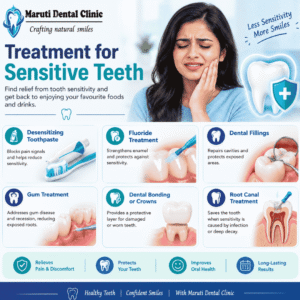
The treatment relies on the underlying condition. These include:
1. Desensitizing Toothpaste
Toothpaste designed for sensitive teeth could also diminish discomfort by blocking pathways that send signals to the nerve of a tooth.
2. Fluoride Treatment
Professional fluoride treatments can help strengthen enamel and may also ease your sensitivity.
3. Dental Fillings
When a filling is placed, it may prevent the exposure from causing sensitivity if there is a cavity or worn tooth surface.
4. Treatment for Gum Disease
If the gum disease or recession is causing sensitivity, periodontal treatment can help protect these exposed surfaces.
5. Dental Bonding or Crowns
Other ways include those teeth that are damaged or worn, such as the need for bonding & crowns to protect vulnerable areas.
When sensitivity is linked to advanced pulp damage or infection, root canal therapy may be used as a way to save the tooth.
How to Prevent Tooth Sensitivity
By preventing the underlying causes, we can reduce sensitivity in teeth in the future. Follow these simple habits for oral hygiene:
- Bristle twice a day with fluoride toothpaste.
- Use a soft-bristled toothbrush.
- Avoid excessive brushing pressure.
- Floss regularly.
- Limit acidic drinks and foods.
- Reduce frequent sugary snacks.
- Do not chew on ice or some really tough objects.
- Manage teeth grinding through professional intervention.
- Attend regular dental checkups.
- Get professional cleaning when recommended.
These habits can help keep your enamel and gums safe.
How Maruti Dental Clinic Can Help
At Maruti Dental Clinic, we do not treat the symptom, but find out the cause. Our dental team will be able to check your teeth and gums and create the right treatment plan.
Our dental care may include, depending on your condition:
- Comprehensive dental examinations
- Digital dental diagnosis
- Scaling and polishing
- Fluoride treatment
- Dental fillings
- Gum disease treatment
- Dental bonding
- Crowns
- Root canal treatment
- Preventive dental care
If your sensitivity is persistent or unexplained, you could have underlying gum disease and a dentist may be able to find the cure.
Frequently Asked Questions
What Is the Main Cause of Sensitive Teeth?
Cavities and gum recession are also known factors, but they can be attributed to enamel wear, exposed dentin or other dental conditions such as cracks as well.
Can sensitive teeth be treated?
Yes. Management is dependent on the etiology and may include desensitizing toothpastes, fluoride treatment, restorations, soft tissue therapy or other dental surgical procedures (e.g. bonding/crowns/root canal treatment).
Does brushing too hard cause sensitivity?
Yes. Brushing too hard can lead to enamel wear and gum recession, which may expose the sensitive areas of your teeth.
Is a sensitive tooth necessarily a cavity?
No. Sensitivity is caused by the erosion of your enamel, gum recession, grinding and cracked or worn teeth, or even a recent dental treatment.
Conclusion
Learning what causes teeth to be sensitive can help you identify any oral health issues early on so that you can receive the care necessary to address them. Enamel erosion, gum recession, tooth decay, cracked teeth, teeth grinding (bruxism), gum disease and aggressive brushing can all lead to sensitivity.
Adjusting your oral hygiene routine and steering clear of known triggers may help, but if the sensitivity continues, it should be checked out by a dentist. If diagnosed early, the cause can be identified and the issue may not become serious.
Personalized dental care for understanding and treating the reasons for sensitivity in teeth is available at Maruti Dental Clinic. When hot, cold, sweet or acidic foods frequently lead to an ache, schedule a dental visit and take the right steps toward a healthier, more comfortable smile.