Many teething habits that children adapt through their learning and adaptation process might sound-so harmless. But specific repetitive actions can have an impact on the growth of their jaws, teeth, speech and face. By increasing knowledge about oral habits in children, parents can identify risk behaviors and take actions to avoid potential consequences.
Oral habits include things like thumb sucking, pacifier use, nail biting, tongue thrusting and mouth breathing(chronic oral habits), which can affect oral development if used for a long time. Parents can seek dental care to address these issues early, helping them avoid serious oral health problems later down the line.
We advise parents at Maruti Dental Clinic to monitor their child at these ages about the changing of their oral habits and seek professional consultation should they observe any habit that is persistent or if it starts affecting teeth & bite.
Oral Habits in Children: The Lowdown
Children can engage in oral habits like repetitive movements of the mouth, tongue or teeth or surrounding musculature. It is natural for some habits to occur; however, if they persist after the age that it would be expected developmentally, they can become a concern.
Examples include:
- Thumb or finger sucking
- Prolonged pacifier use
- Tongue thrusting
- Lip biting or sucking
- Nail biting
- Mouth breathing
- Cheek biting
- Teeth grinding
- Biting pencils or other objects
The impact of these habits is determined by the frequency, intensity and duration.
Common Oral Habits in Children
Thumb Sucking
Babies and toddlers will suck their thumb as it is a source of comfort. Thumb sucking is mostly problematic once it has gone on for too long (past early childhood), but the occasional occurrence during early childhood is not generally an issue.
Nevertheless, if thumb sucking is persistent, it can affect the position of upper and lower front teeth, roof of the mouth (palate) can get narrow which in turn causes difficulty in speaking and chewing.
Pacifier Use
An infant can be calmed down and soothed by a pacifier. But long-term use may impact dental development. A pediatric dentist may help parents determine the right timing for tapering and phasing out pacifier use.
Tongue Thrusting
Tongue-thrusting (also known as a tongue thrust) is when the tongue goes forward against or between the teeth, either when swallowing or at rest. Tongue thrusting that lasts into childhood can interfere with the positions of the front teeth and bite.
Mouth Breathing
Natural allergies, nasal congestion, enlarged tonsils or just airway problems may force the children to breathe in through the mouth. Chronic mouth breathing may lead to dry mouth and change how the mouth is shaped.
Nail Biting
Nail biting can put repetitive stress on our teeth, affect oral hygiene and it may help chip or wear down tooth surfaces. It can also transfer bacteria between your hands and mouth.
Teeth Grinding
Some of the kids have the habit of grinding or clenching their teeth, especially while they are asleep. Some children grind their teeth occasionally, which is not unusual but constant grinding can lead to tooth wear off, sensitivity, or jaw pain.
How Do Oral Habits Impact Future Development?
Prolonged oral habits in children can disrupt normal dental and facial development. It makes as much sense to say that the age of the child and the habit all have different magnitudes of effect.
Potential effects include:
- Misaligned teeth
- Changes in the bite
- Increased spacing between teeth
- Protruding front teeth
- Change in shape of the palate
- Tooth wear
- Jaw discomfort
- Speech-related concerns
- Increased risk of dental problems
However, not every child who has one of these habits are going to run into dental issues. Based on the dental evaluation, it can be decided whether intervention is needed or not.
When Should Parents Be Concerned?
More worrisome instances are frequent or severe oral habits in children, as well as habits that persist into adulthood.
See a dentist if you experience:
- Sucking which uses the thumb or fingers, extending into later childhood
- Teeth looking out of the line or scaled down
- Difficulty biting or chewing
- Changes in speech
- Persistent mouth breathing
- Frequent teeth grinding
- Jaw pain or clicking
- Alterations in facial/dental development
Timely assessment is helpful to troubleshoot issues that may become rather voluminous.
What Can Parents Do to Break Bad Oral Habits?
It usually has to be done with a lot of patience, and reward for the child. Do not punish or shame; these methods are likely to exacerbate anxiety.
Try these strategies:
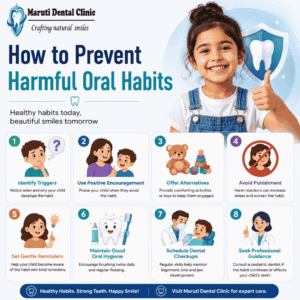
Use Positive Reinforcement
Early on, praise your child when they resist the habit as opposed to concentrating on errors.
Identify Triggers
Kids might suck their thumb or chew their nails when they are tired, nervous, bored or stressed. Realising the trigger will help parents replace that unwanted behavior.
Offer Alternatives
Replacing a repetitive skill with some kind of reassurance action, play item or leisure strategy might assist.
Create Gentle Reminders
Simple prompts make it easier for kids to tune in to the behavior without feeling badly about themselves.
Seek Professional Guidance
However, if the habit persists after these strategies have been put into practice, a pediatric dentist can also suggest other appropriate interventions at that time.
Dental Treatment for Habit-Related Problems
The child’s age, the dental status, as well as the severity of the oral habit will guide treatment.
A dentist may recommend:
- Regular monitoring
- Habit counseling
- Preventive dental care
- Orthodontic assessment
- Customized habit-breaking appliances in selected cases
- Repairing tooth or gum damage due to the habit
Sometimes, all that is needed is timely monitoring and parental guidance.
How can Maruti Dental Clinic Help
We Understand the needs of Children and we know that their treatment requires a Gentle Attitude. At Maruti Dental Clinic. Our dental practice can check the child’s teeth, gums, bite, and overall oral development.
Your dentist can identify oral hygiene in kids, determine if they are affecting tooth alignment or jaw development, and suggest next steps.
Our approach focuses on:
- Child-friendly dental examinations
- Preventive dental care
- Monitoring tooth development
- Identifying bite-related concerns
- Parent education
- Personalized dental guidance
Regular pediatric dental visits also allow any areas that may seem problematic to be detected early on, while at the same time encouraging children in keeping good teeth cleaning practices.
How to Prevent Harmful Oral Habits
Parents can help their children have healthy teeth by:
- Assuming brushing two times a day
- Teaching children to floss appropriately
- Limiting sugary snacks and drinks
- Discouraging chewing on pencils and hard objects
- Encouraging nasal breathing where appropriate
- Addressing persistent habits early
- Scheduling regular dental checkups
A good relationship with the dentist early on can help make their visits easier and more positive experiences in the future.
Frequently Asked Questions
1. Are All Oral habits harmful to the Child
No. All of these, though normal, are actually habits introduced in infancy and early childhood. Complications become more likely if certain habits persist for an extended time or begin to interfere with oral/ dental growth.
2. When should thumb sucking stop?
That can vary between children when the time is right. Parents should speak with a pediatric dentist about the thumb sucking continuing as adult dental care starts coming in.
3. Do oral habits change the shape of teeth?
Chronic habits with repetitive force placed on the tooth or jaws can possibly also lead to movement of teeth and/or bite change.
4. What can your dentist do to help stop these habits?
Yes. Fortunately, visible and developmentally negated habits can be determined by a dentist who is in the position to advise treatment or guidance according to adolescent size.
Conclusion
Importance of Understanding Oral Habits in Children for Healthy Dental Development Thumb sucking, extended pacifier use, tongue thrusting, mouth breathing and habits like nail biting or teeth grinding may need to be addressed when they persist or start impacting the teeth and jaws.
Don’t react with punishment, but use positive reinforcement and expert advice. Regular dental check-ups can recognize changes in tooth alignment, bite and oral development at a convenient early stage.
Maruti Dental Clinic is a professional and well-known dental care clinic where we specialize in preventive and child-friendly dental care to establish healthy smiles. Consultation with a dentist can give you peace of mind if you’re worried about your child habits, or there is an alteration in the teeth or bite.