The relation between smoking and oral health is more intensive than many people would be thinking. Although most smokers know that smoking endangers their lungs and heart, what tobacco does to the inside of a smoker’s mouth is less known and often disregard until very serious complications arise. From stained teeth to gum disease and even oral cancer, smoking gradually damages every part of your smile.
And at Maruti Dental Clinic, we are no stranger to patients battling tobacco-related troubles. Identifying these signs early can open up a lot of opportunity to prevent permanent damage and expensive treatments.
How Smoking Affects Your Teeth
The first obvious signs of tobacco use are the brown stains in your teeth. Nicotine and tar cling to enamel, staining teeth yellow or brown. Without regular brushing, they continue to sink in over time, and eventually become too tough for brushing alone.
But smoking and oral health have much more serious implications. Smoking makes enamel weaker, increases plaque buildup and risk of cavities. Smoking is usually the contributing factor, it causes tartar to build faster than you can brush away,it needs professional help.
If left untreated, this buildup can cause tooth decay and gum infections that may necessitate fillings, root canal therapy, or even extraction.
Gum Disease: A Silent Threat
Gum disease is one of the most severe side effects of smoking. Tobacco cuts off blood circulation in the gums, and this deprives them of nutrients and oxygen. That weakens the body’s natural defense system and delays healing.
Since smoking thickens gum tissue, they may not notice that their gums are bleedin which is an early sign of gum disease. This makes smoking and oral health a deadly combination since the infection may be able to creep along unnoticed.
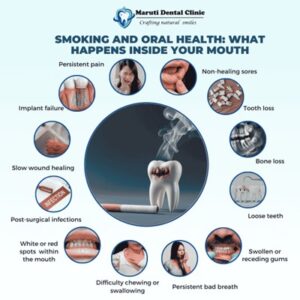
Manifestations of severe gum disease may include:
- Swollen or receding gums
- Persistent bad breath
- Loose teeth
- Bone loss
- Tooth loss
Early detection and professional care of periodontal disease are necessary to avoid irreparable injury.
Increased Risk of Oral Cancer
Oral cancer is one of the most serious risks linked with smoking. Smoking brings the mouth into contact with thousands of harmful chemicals that mutate cells and make them more likely to grow abnormally.
Warning signs may include:
- White or red spots within the mouth
- Non-healing sores
- Difficulty chewing or swallowing
- Persistent pain
Smoking is a leading cause of some of the deadliest oral health problems: oral cancer. Regular dental visits are important to detect the disorder early and treat it effectively.
Delayed Healing and Dental Treatment Complications
When you’ve had dental work done, such as tooth extractions; implants or gum surgery, smoking will dramatically slow the healing process. Nicotine constricts blood vessels, which means less oxygen is getting to your body tissues.
What this means, is that smoking and oral health are directly related to the length of time it takes for a treatment to take effect and if the procedure will work at all. What are smokers more at risk for?
- Implant failure
- Dry socket after extraction
- Post-surgical infections
- Slow wound healing
Dentists frequently tell patients to quit smoking before and after procedures in order to achieve better results.
Persistent Bad Breath and Dry Mouth
Saliva output is decreased with day time xerostomia occurring in smokers. Your saliva helps by rinsing away bacteria and acid neutralizing. This heightened bacteria growth leads to chronic bad breath, and it also makes cavities more likely.
Many patients who suffer from bad breath find that smoking and oral health are related. And solving the underlying problem tobacco use, in this case is generally required for long-term success.
Tooth Loss and Bone Damage
Chronic smoking denotes a weakened jawbone and structure. As gum disease advances and bone loses its strength, teeth are left with no stable foundation.Studies have shown smokers are far more likely to lose teeth than non-smokers. The correlation between smoking and oral health can be visualized when people need to have dentures or dental implants earlier than expected.
Preventive medical care and lifestyle modification can retard this progression.
Reduced Taste and Overall Oral Sensation
Smoking can also damage taste buds which inhibit the ability to fully savour food items. And in time the taste sense deteriorates, with changes in appetite occurring for a few people.
While seemingly insignificant, this also highlights how smoking and oral health impact so much more than just visually-noticeable tooth problems.
Can the Damage Be Reversed?
The good news is that stopping smoking can make a big difference to oral health. Some damage may need treatment, but quitting tobacco use lets the body start healing.
Within weeks of quitting:
- Blood circulation improves
- Gum inflammation decreases
- Breath becomes fresher
Over months and years, hazards of smoking to oral health continue to wane, and your likelihood of serious complications also decline.
Recovery is facilitated by professional dental cleaning, gum therapy and ongoing checkups.
Preventive Steps for Smokers
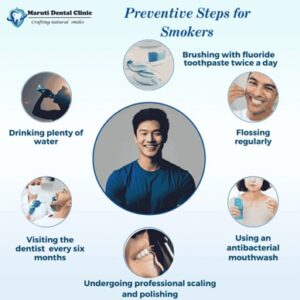
If you can’t quit cold turkey, your risk can still decrease by:
- Brushing with fluoride toothpaste twice a day
- Flossing regularly
- Using an antibacterial mouthwash
- Drinking plenty of water
- Visiting the dentist every six months
- Undergoing professional scaling and polishing
But the most successful strategy to eliminate the hazardous effects of smoking on oral health is to simply quit.
Why Regular Dental Visits Matter
Regular dental check-ups offer early detection of gum disease, oral cancer and other tobacco-related problems. Routine professional care prevents plaque and tartar from getting out of control.
At Maruti Dental Clinic, we offer thorough oral screenings and personalized hygiene care to safeguard your smile. Our staff assists the patient in dealing with or preventing such tobacco-related complications.
It’s better to be safe today than sorry tomorrow.
Final Thoughts
Smoking doesn’t just damage your internal organs it directly affects your teeth, gums and entire oral environment. The risks range from simply cosmetic and easily treated staining of the teeth to the most severe risk, cancer.
Knowing the relationship between smoking and oral health gives you control to choose what’s best for your health. Smile protection begins with knowing what to look for, preventive care, and professional treatment.
The condition of your mouth tells the story of your overall health. Deciding to give up smoking is one of the best and most empowering decisions you can make for a healthier future.