Healthy gums are integral to a confident smile. When gums begin to recede from the teeth, it exposes roots and you are more likely to suffer sensitivity, decay, or even tooth loss. If you are experiencing longer-looking teeth or bleeding while brushing, it may be time to consider gum recession treatment. Not only does early intervention improve oral health, but it also restores comfort and aesthetics.
What Is Gum Recession?
Gum recession refers to a dental issue in which the gum tissue that surrounds the teeth pulls back or wears away, exposing more of the tooth or its root. You can read more about the signs and symptoms of this condition which progresses gradually, often without being noticed in early stages here. But if left untreated, it can be a major hazard to your oral health.
Without protective enamel, these exposed root surfaces are at greater risk. Hence, patients usually complain of sensitivity in the teeth like on eating hot, cold or sweet food.
Common Causes of Gum Recession
The first step to treating gum recession is understanding the underlying cause. Some of the primary reasons are as follows:
- Aggressive Brushing: Overbrushing or using a hard-bristled toothbrush can gradually wear away gum tissue.
- Poor Oral Hygiene:Plaque that hardens becomes tartar, a contributor to gum recession.
- Genetics:Some individuals are inherently more susceptible to gum issues because of thinner gum tissue.
- Teeth Grinding: Grinding or clenching teeth place excess pressure on gums.
- Tobacco Use: Smoking also damages gum tissue and lowers the capacity to heal.
Knowing these elements guide your dentist on the best gum recession treatment plan.
Symptoms You Should Not Ignore
Most patients wait until discomfort arises to get help. Watch out for these signs:
- Tooth sensitivity
- Longer-looking teeth
- Visible tooth roots
- Bleeding gums
- Swollen or red gums
- Loose teeth
If you experience these symptoms, visit a dental professional right away for proper evaluation and timely gum recession treatment.
Why Early Treatment Matters
Letting this slide can cause great problems in future. Supporting bone structure may deteriorate leading to tooth mobility or loss. Early gum recession treatment helps:
- Protect exposed roots
- Reduce sensitivity
- Prevent further gum damage
- Improve smile appearance
- Strengthen overall oral health
Prevention can spare you from complicated and expensive procedures in future.
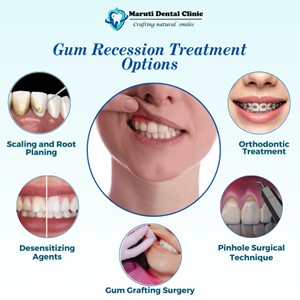
Gum Recession Treatment Options
Many of these can be addressed with modern dentistry methods, which have many effective options available depending on how severe the issue is.
- Scaling and Root Planing (Deep Cleaning)
This is a non-surgical procedure that cleans below the gum line, removing plaque and tartar. It helps the gums reattach to teeth and prevents additional recession. This is usually the initial step in treating gum recession.
- Desensitizing Agents
In less-severe cases, dentists might use special varnishes to soothe sensitivity and shield exposed roots.
-
Gum Grafting Surgery
For moderate and severe cases, gum grafting is the way to go. A piece of tissue is removed from another site in the mouth (typically the palate) and sutured to the afflicted site. This state-of-the-art gum recession treatment improves aesthetics and restores lost tissue.
-
Pinhole Surgical Technique
This minimally invasive technique requires making a small hole in the gum, which is pulled back and repositioned over exposed roots. It has a shorter recovery time than traditional surgery.
- Orthodontic Treatment
If the cause of recession is misaligned teeth, braces or aligners will likely be part of your overall gum recession treatment.
Your dentist will suggest the right option for you, based on your gum tissue condition, bone support and overall oral health.
Recovery and Aftercare.
- Use a soft-bristled toothbrush
- Follow correct brushing technique
- Floss gently daily
- Avoid smoking
- Attend regular dental check-ups
- Use prescribed mouthwash if recommended
Good oral hygiene will ensure that your treated gums stay healthy and stable.
Preventing Gum Recession
Implementing certain habits can help prevent severe gum recession.
- Brush twice a day with light pressure
- Use fluoride toothpaste
- Replace toothbrush every 3 months
- Get a professional clean every 6 months
- Limit teeth grinding by managing stress
- Eat a healthy and balanced diet
Gum disease status progress is highly affected by healthy lifestyle habits.
Final Thoughts
Gum recession is a common, yet treatable, condition. When detected early and treated properly, gum recession will not only help protect teeth and eliminate sensitivity, but ensure a healthy smile. Don’t dismiss the warning signs professional help can go a long way.