Everyone loves a bright, white smile—it’s a sign of health, confidence, and good hygiene. While brushing, flossing, and regular dental cleanings are essential, what you eat can also have a big impact on how white your teeth appear. In fact, there are several foods that whiten teeth naturally without the need for chemical treatments or expensive whitening procedures.
In this guide, you’ll learn how certain foods help whiten your teeth, which ones to add to your daily diet, and how to maintain your smile with simple, natural choices.
Why Choose Natural Teeth Whitening?
Many people turn to whitening strips, gels, or professional treatments to improve their smiles. Professional teeth whitening treatments offered at dental clinics are safe, fast, and highly effective in removing deep-set stains and brightening your smile. However, maintaining those results requires consistent care beyond the clinic.
That’s where natural methods play a crucial role. Including foods that whiten teeth naturally in your daily diet can help prevent new stains, strengthen enamel, and prolong the effects of professional whitening. While these foods may not replace in-office treatments, they are an excellent way to support your oral health and maintain a whiter smile between appointments.
How Certain Foods Whiten Teeth
Before diving into the list of whitening foods, it’s helpful to understand how they work:
- Crunchy textures scrub away plaque and stains.
- Natural acids help dissolve surface discoloration.
- Enzymes fight bacteria and clean the enamel.
- Water content washes away food particles and acids.
- Vitamins and minerals support gum health and strengthen teeth.
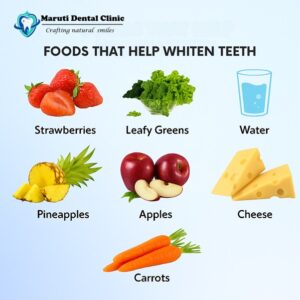
Now, let’s take a closer look at the top foods that whiten teeth naturally.
-
Apples
Crunchy, juicy apples act like a natural toothbrush. Their texture helps scrub away food particles and surface stains, while the malic acid in apples stimulates saliva, which helps clean the mouth.
Tip: Enjoy apples as a daily snack. They’re especially effective after meals when you can’t brush right away.
-
Strawberries
Strawberries contain malic acid, a natural whitening agent. This acid gently removes surface discoloration, and the fruit’s antioxidants support healthy gums.
How to use: Mash one strawberry and mix it with a pinch of baking soda. Apply to your teeth, leave for a few minutes, and rinse well. Use sparingly to avoid enamel erosion.
-
Pineapple
Pineapple contains bromelain, an enzyme that helps break down plaque and reduce stains. It’s also known for its anti-inflammatory benefits, promoting healthier gums.
Incorporate it into your diet: Add pineapple to smoothies, salads, or enjoy it fresh.
-
Broccoli
Raw broccoli acts as a gentle scrub for your teeth. It’s also high in iron, which may form a protective coating on your enamel, reducing acid damage.
Pro tip: Add raw broccoli to salads or enjoy it as a crunchy snack between meals.
-
Carrots and Celery
These crunchy vegetables are high in water and fiber. They increase saliva production and gently scrub teeth as you chew. Celery’s long fibers can even mimic the action of dental floss.
Healthy habit: Include them in your lunchbox or as a side snack during the day.
-
Cheese and Yogurt
Dairy products like cheese and plain yogurt are rich in calcium and phosphates that help rebuild enamel and neutralize acids. Cheese also stimulates saliva, which aids in cleaning your teeth.
Quick fix: A small piece of cheese after meals can help protect your teeth and keep your mouth fresh.
-
Oranges (in moderation)
Oranges, though acidic, are great for increasing saliva flow. They can help rinse away bacteria and food particles. Just be careful not to overdo it, as excessive acid exposure can harm enamel.
Best practice: Rinse your mouth with water after consuming oranges.
-
Nuts and Seeds
Almonds, walnuts, sesame seeds, and sunflower seeds offer a gentle abrasive texture that helps remove plaque. They’re also high in minerals that strengthen teeth.
Snacking idea: Keep a mix of unsalted nuts and seeds on hand for a natural tooth-polishing boost.
-
Water
Staying hydrated is crucial for oral health. Water helps wash away food particles, sugars, and bacteria that can stain your teeth.
Smart tip: Rinse your mouth with water after drinking coffee, tea, or red wine to reduce staining.
- Baking Soda (used sparingly)
Though not a “food” in the traditional sense, baking soda is often found in natural whitening toothpaste for a reason. It gently scrubs away stains and neutralizes acids in the mouth.
Usage tip: Brush with a small amount of baking soda once a week—but don’t overuse, as it may damage enamel over time.
Foods and Drinks That Stain Your Teeth
While adding foods that whiten teeth naturally to your diet is important, it’s equally vital to limit or avoid foods that contribute to staining. These include:
- Coffee and tea
- Red wine
- Dark berries (when consumed in excess)
- Cola and sugary sodas
- Soy sauce and tomato sauce
- Balsamic vinegar
- Candy with artificial dyes
If you do consume these, rinse with water afterward or brush after 30 minutes to minimize their impact.
Other Natural Whitening Tips
Adding the right foods to your diet is just one step. To make the most of your efforts:
- Brush and floss daily.
- Use a soft-bristled toothbrush and fluoride toothpaste.
- Visit your dentist for regular cleanings and checkups.
- Avoid smoking or chewing tobacco.
- Use a straw for staining beverages like coffee or juice.
These habits, combined with natural whitening foods, create a powerful routine for a brighter, healthier smile.
Can These Foods Replace Professional Teeth Whitening?
While foods that whiten teeth naturally offer noticeable benefits over time, they may not replace professional whitening treatments entirely. However, they are excellent for maintaining a white smile and preventing future stains after a dental whitening session.
Using natural foods as part of your daily routine provides gentle and consistent results without sensitivity or risk.
Final Thoughts
Your smile is one of the first things people notice about you—why not keep it naturally radiant? By adding foods that whiten teeth naturally to your everyday diet, you’re choosing a simple, safe, and healthy way to boost your confidence and improve your oral hygiene.